
No, not those multivitamins. Not the supplements you might be picturing in your mind. But the elements that have been shaping my time, learning, and life recently.
My multi-vitamin summer style of life includes:
- Books
- Podcasts
- Streaming platforms – but streaming a lot of non-fiction material
- Silence – At times, I have very strong feelings about what is happening in our country. Sometimes it’s better not to write. Sometimes silence before God is the best path for my many emotions and opinions. The lack of posts has sometimes taken more discipline than the goal of writing them.
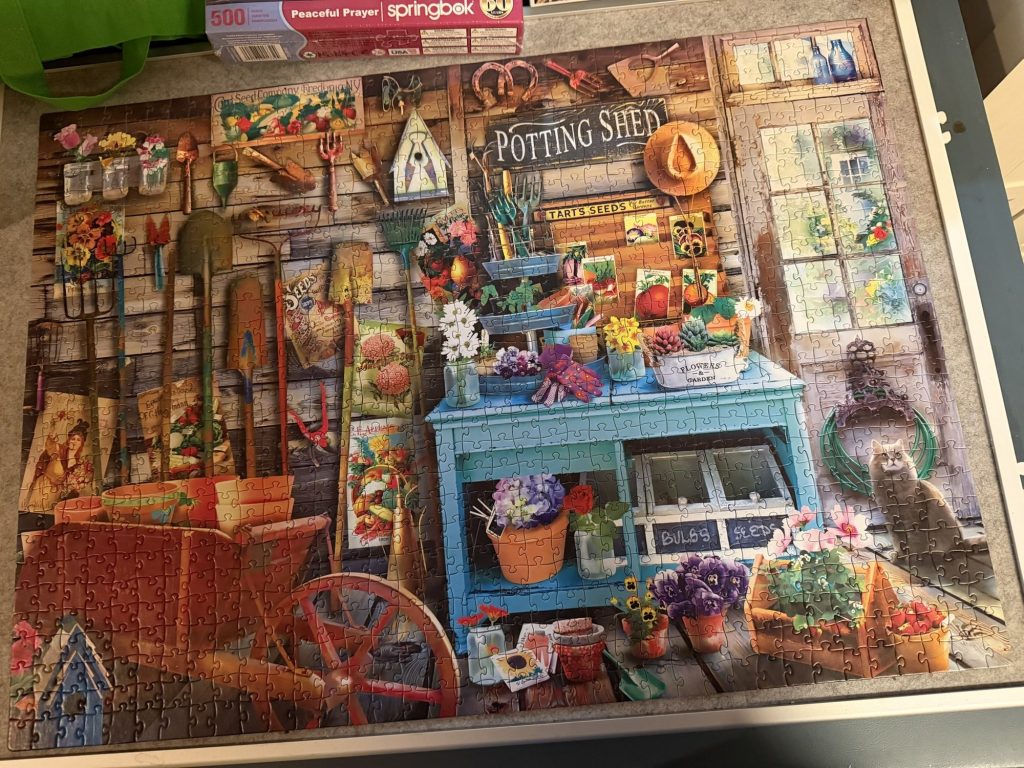
- Hobbies – sometimes all the learning I do can feel too heavy, and I need something to divert my attention. Working on a puzzle fit the bill for part of this summer. Sometimes, the simple joy of finding puzzle pieces that fit together is so satisfying!
Now, some additional book reviews. Click “My first book review post” to read some earlier book reviews. But on to five others that I would recommend:
- The Book Club for Troublesome Women – by Marie Bostick – A historical fiction novel. Four women during the 60’s form a book club, and what they read challenges their thinking. The first book they read is The Feminine Mystique. The book The Feminine Mystique is almost like an additional character. Themes of patriarchy are heavily explored, but so is the power of storytelling. This was an enjoyable book. Confession – I listened to it on Audible.
- The Correspondent – by Virginia Evans. – Also, a fiction novel. This book was written as a series of letters to tell the story of the main character, Sybil Van Antwerp. I loved the concept of telling the entire story through letters to and from different people. It inspired me to pull out my pen and write a letter to the parents of my childhood best friend, thanking them for the years of family friendship. Thankfully, I do get to visit with these friends from time to time. This book was a delight – even though I also listened to it on Audible.
- I See You’ve Called in Dead – by John Kenney. – Again, fiction. But this book was written by a male writer. After several books by women, I thought I should try a book by a man. The book opens with the main character, Bud, after drinking a bit too much, accidentally publishing his own obituary in the paper where he works. The character is struggling with his life and has made errors in previous obituaries he’s written/published. This is somewhat dark comedy. Bud is going through a painful divorce, which somewhat explains his struggles with life. The comedy enters when his employer can’t legally fire him because all of the systems now list him as deceased. So, he is suspended from work for a while. The book explores male friendship and finding joy in everyday life. And again, I listened to this book on Audible – surprised by how much I can enjoy listening to a book on Audible.
- The Resistance Knitting Club – by Jenny O’Brien. This is a World War II historical fiction book. This is inspired by the true story of a woman who used knitting patterns to encode intelligence during World War II. But the main story is fiction. It explores the key theme of resilience – the will to keep going. It also shows what it was like to hope for soldiers to return safely from war. I’ve read a lot of non-fiction, historical fiction, and fiction about World War II and would highly recommend this book. Again, an Audible book.
- I Told Me So: Self-Deception and the Christian Life – by Dr. Gregg A. Ten Elshof. This is a work of non-fiction that I actually read as a physical book, not on Audible or Kindle. Dr. Elshof is a Professor of Philosophy at Biola University. The book does have a bit of an academic tone, but it explores the key theme that Christians can be self-deceived. There are ways of thinking we can develop that make some beliefs or actions seem less bad in our minds. The Bible speaks of working out one’s salvation with fear and trembling, as well as watching oneself when seeking to correct someone else’s way of thinking (Philippians 2:12 and Galatians 6:1). The book offers suggestions on how to guard against self-deception and groupthink.
- Live, Laugh, Love: The Secret History of White Christian Women and the World They Made – by Kristin Kobes Du Mez. This book was published September 2026, so it’s fresh of the press. I first heard of this book on the No Small Endeaver podcast with Lee C. Camp. The author grew up in a Dutch Reformed context and earned her PhD at Notre Dame studying gender, religion, and politics. I also grew up in a Reformed context, so I was curious to read her findings. I recognized certain aspects of this book clearly. This is a book of history. It documents movements among white Christian woman (because the church is still largely segregated by race in America) – books written and read, blogs that were popular, theological beliefs, Bible studies, multi-level marketing organizations – the Christian beliefs that women have held and helped spread. I found this book fascinating and helpful in understanding the background of some of the aspects of politics and evangelicals that I observe today. I highly recommend this book. The activities of women due have an influence in the world we see.
- Let Them – by Mel Robbins and Sawyer Robbins. This mother and daughter duo wrote this book together. Mel is podcaster and motivational speaker. I listened to this book via Audible and I think that was a wise choice because it sounds like a motivational speech or workshop. Overall, I think there is a lot of wisdom contained in this book. However, this Let Them theory overlaps with Stoicism at points. I’m not talking about someone having a stoic expression on their face. I’m referring to the Stoicism of ancient Greece and Roman empire. The Let Them theory emphasizes social acceptance of other’s behavior while focusing on what you can control. Robbins claims that there is a power within us that often gets misdirected because we are focusing on the wrong things – what other people are doing and this wastes precious time. The second part of the Let Them theory is ‘Let Me’… Let Them do what they want and Let Me respond in a way I can control. What lacks in this book is any description of any moral duty to anyone else. Historical Stoicism demands virtuous action and inner work to achieve a happy life. But this is also the goal of the book – achieve a happy life and thrive. There is no mention of a Christian faith. Again, there’s a good bit of wisdom – but a lack of ethics.
Not only have I kept up with reading or listening to good books, but I do also have several podcast episodes I would like to recommend as well:
- David French on How the Confederacy Still Shapes America – Good Faith – This podcast was especially interesting to me as I grew up in the South of the former Confederacy. David French highlights aspects of culture which I can agree with and then at some points he challenges what is really helpful and suggests that repentance might be needed in some areas. Really good food for thought.
- Lee Warren: Why You’re Not Stuck With the Brain You Have – This one is from the No Small Endeavor podcast by Lee C. Camp, and I have read Scandalous Witness and listened to both of his podcasts on a semi-regular basis. Lee Warren is a neurosurgeon who has suffered the grief of losing a child and combat war in Iraq. He’s experienced extreme grief and PTSD. But in this episode, Warren introduces ideas and practices to help combat ruts in thinking patterns – rumination – that can lead to anxiety, depression, and other things. In my mind, this falls under a way that Christians can take every thought captive and make it obedient to the thoughts of God (2 Corinthians 10:5) or forgiving * a grievous hurt that you keep ruminating over (see also Mattew 18:22 of forgiving someone 70 times 7).
For the July 4th holiday and the 250th anniversary of the USA being a country – I actually spent the time researching and learning about the Pacific theater of World War II as both of my grandfathers were in the Pacific during that time. A few resources I would recommend learning more about the Pacific theater:
- The Pacific – The producers include Tom Hanks and Steven Spielberg. This series is about soldiers who fought in the Pacific theater. I learned so much! I went on to fact-check – I have to fact-check everything I watch that claims to be based on a true story. As I was fact-checking, I learned that one of the soldiers’ sons (Henry Sledge, son of Eugene Sledge) had written a book by taking excerpts from his father’s writings and then adding his own memories. Which leads me to:
- The Old Breed – The Complete Story Revealed: A Father, A Son, and How WWII in the Pacific Shaped Their Lives. – by Henry Sledge – Nonfiction. – This was a great book to read! I loved it and I’m so happy that Eugene Sledge wrote so much down and was willing to share his memories with others, including his son. Again, I learned so much! I can highly recommend this book, too! Fun fact – the airstrip where Eugen Sledge did a lot of fighting on the island of Peleliu is being renamed in honor of him.
I hope sharing some of the multivitamins I have taken over the past few months helps others!


Leave a Reply